
Tech Truths: What Beginners Should Really Know
From 'AI will replace you' to ' tech industry is unstable' — here’s what I’ve learned after hearing it all

When I was new in tech, I heard so many things — some true, some terrifying, some just plain confusing. From "Python is a must" to "tech is too toxic," everyone had advice.
In this post, I’ve collected all those common things beginners hear in tech — and added honest insights on what’s true, what’s a myth, and what you actually need to know.
Hey I am shivani. Here are the common things I heard when I was new in tech
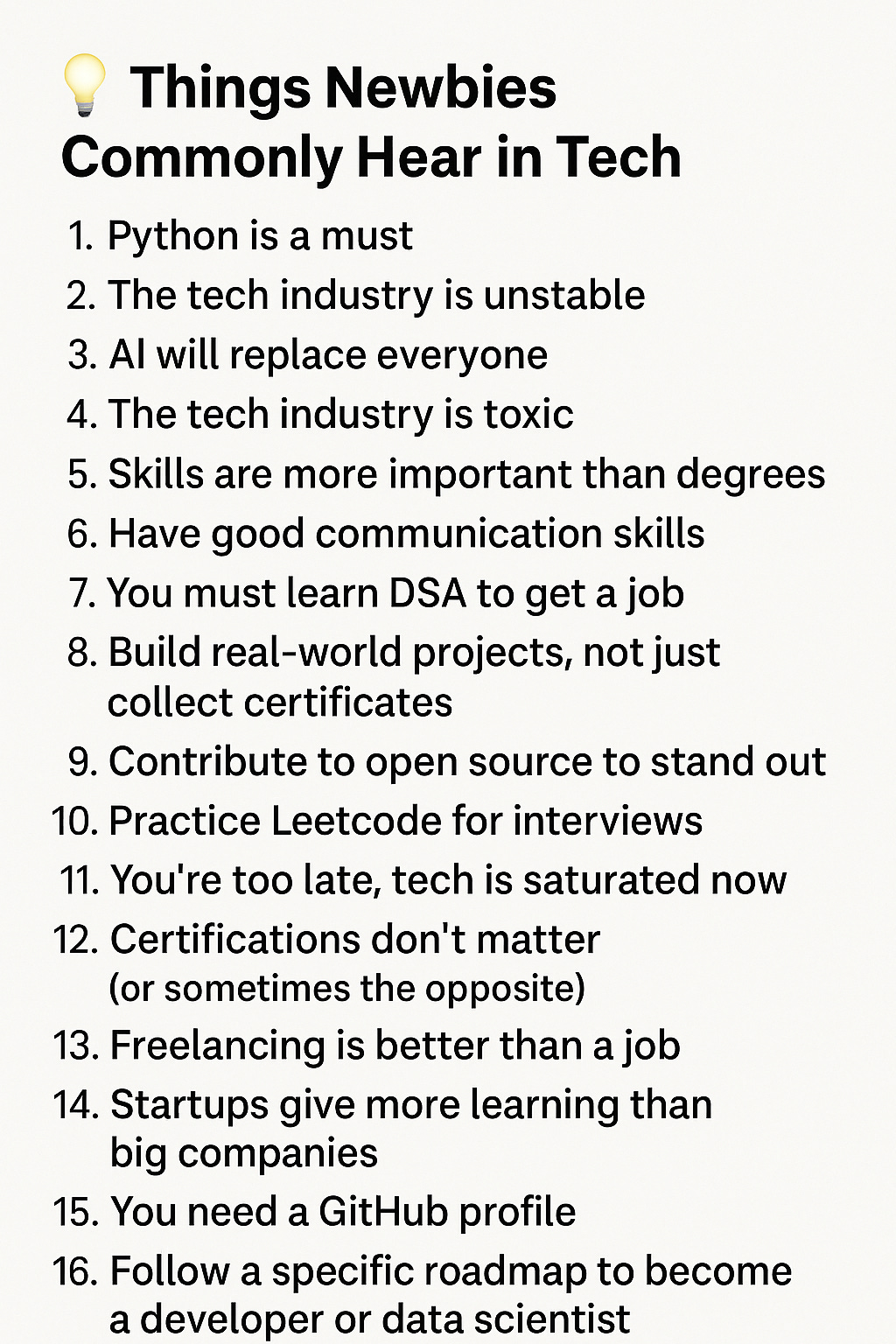
Here's a starter explanation for each point:
💼 Career & Industry Advice
The tech industry is unstable
Yes, layoffs happen. But that’s true in most industries. Tech just gets more media attention. What matters most is keeping your skills updated.AI will replace everyone
AI might change how we work, but it won’t replace those who know how to use it. Learn to work with AI, not fear it.The tech industry is toxic
There are bad environments, sure. But there are also inclusive teams, supportive mentors, and amazing communities. It’s about finding the right place.Freelancing is better than a job
Freelancing gives freedom, but also uncertainty. Jobs offer stability but sometimes less control. Both have pros and cons — choose what fits you.Startups give more learning than big companies
Startups teach speed and multitasking. Big companies teach structure and depth. Both offer learning — just different types.You’re too late, tech is saturated now
Tech is evolving every day. If you start now and stay consistent, you’re not late — you’re just getting in at the right time.You must always be learning new tech
True. But that doesn’t mean burning out. Learn at your pace. Even mastering one tool well is powerful.Everyone in tech is a genius
Nope. Most people Google stuff daily, use ChatGPT, and learn as they go. You don’t need to be a genius — just curious and consistent.
🛠 Skills & Learning
Python is a must
Python is beginner-friendly and used in many fields. But it's not the only path. If you’re into web dev, maybe JavaScript is better. Choose based on your interest.You must learn DSA to get a job
For some companies, yes. Especially big tech. But not every tech job requires Leetcode-level DSA mastery.
watch video if you don’t want to read more:
11. Practice Leetcode for interviews
Important for product-based companies, yes. But startups and service companies often care more about projects and communication.12. Skills are more important than degrees
Companies hire people who can solve problems, not just those with fancy degrees. Still, degrees can help open doors early on.13. Certifications don’t matter
Depends. Some help (like AWS, Google certifications), but they won’t replace real skills or experience.14. Follow a specific roadmap to become a developer or data scientist
Roadmaps are helpful guides, not rules. Adapt them to your own learning style and interests.💬 Soft Skills & Personal Branding
15. Have good communication skills
Explaining your thoughts clearly — in meetings, interviews, or writing — really sets you apart. It’s a skill you can build with practice.16. You need to know how to explain your code well
It’s not enough to write code — you need to walk someone through your logic. Interviewers look for clarity more than perfection.17. You should build a personal brand on LinkedIn or Twitter
Optional, but powerful. Sharing your learning journey online builds connections and shows consistency.🧠 Tools, Platforms & Presence
18. You need a GitHub profile
A clean GitHub with your projects shows initiative. It’s like your tech portfolio. Doesn’t have to be perfect — just real.
🧨 Top Myths Beginners Often Hear in Tech
1. You need to be a genius to succeed in tech
Myth: Only "smart coders" make it.
Reality: Most people in tech Google daily, ask ChatGPT, and learn as they go. Curiosity > IQ.
2. You must start coding at an early age
Myth: If you didn't start at 12, you're too late.
Reality: Many people switch to tech in their 20s, 30s, even 40s — and thrive.
3. You need a CS degree to get into tech
Myth: No degree = no job.
Reality: Bootcamps, self-taught devs, and non-CS grads are landing roles everywhere — skills matter more now.
4. Tech is only for coders
Myth: You must code to be in tech.
Reality: Designers, testers, product managers, data analysts, tech writers — not all tech roles require coding.
5. More tools = better developer
Myth: The more tools you list, the smarter you are.
Reality: Mastering a few tools deeply is better than skimming many.
6. You need to know everything before applying for jobs
Myth: You must be “fully ready.”
Reality: No one is 100% ready. Learn the basics, apply, and grow on the job.
7. Open source is only for experts
Myth: Only pro devs contribute to open source.
Reality: Beginners can contribute too — fixing typos, updating docs, or asking good questions.
💼 My Thoughts on Career Advice:
When I first stepped into tech, career advice felt like noise — some people said "join a startup to grow faster," while others swore by "big companies for stability." I was confused.
One thing I’ve learned is: everyone gives advice based on their own journey. What worked for them might not work for you — and that’s okay. So if you’re feeling lost, you're not alone. Try things, switch paths if needed, and define your own version of success. That’s real career clarity.
✨ What’s something you heard as a beginner in tech?
Drop it in the comments — let’s build a real beginner-friendly list together.
If you found this helpful, consider subscribing to get more honest tech insights from someone who’s still figuring it all out (like you!).